
Engineering at the Speed of Trust
From Iron Rings to AI Safety: The Canadian Engineering Asia-Pacific Conference 2026

1. The calling of an engineer
One of the most vivid scenes from my undergraduate years (in the 90s) in Electrical and Computer Engineering at the University of Waterloo did not happen in a lab or a lecture hall. It happened in a guarded room, with hooded figures, heavy chains, and a small ring of iron.
The Iron Ring ceremony in the final year of study is one of the most secretive and theatrical experiences in Canadian engineering education. No photographs. No public livestream. No family in the audience. You are ushered into a private ritual, sworn to secrecy, and invited to join a chain of engineers stretching back a century. The legend goes that the first rings were hammered from the collapsed steel of the Quebec Bridge, whose catastrophic failure in 1907 killed many workers and shook public confidence in engineering. Rudyard Kipling, the author of The Jungle Book, was asked to write the ceremonial “Ritual of the Calling of an Engineer,” a text so guarded that it was long kept out of print and only modernized by the Seven Wardens in 2025 [1, 2]12.
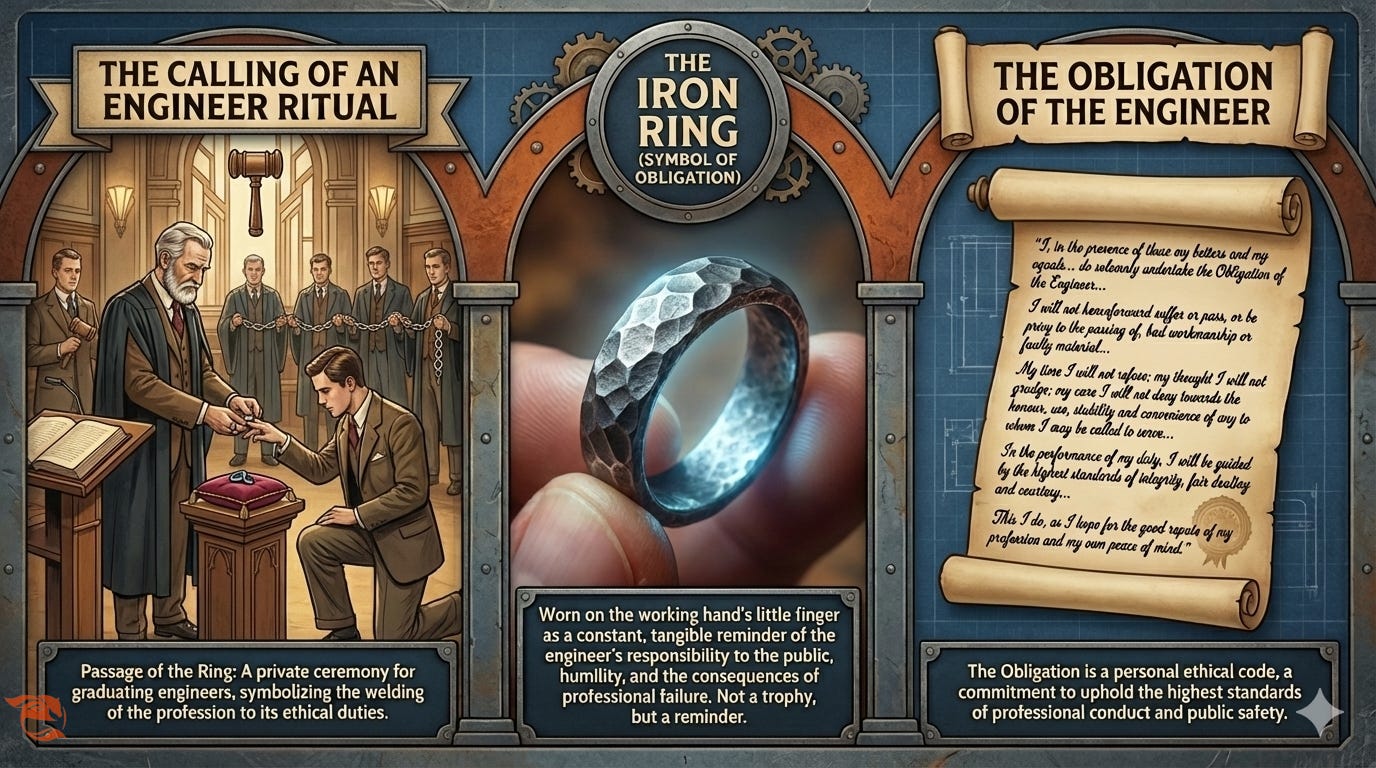
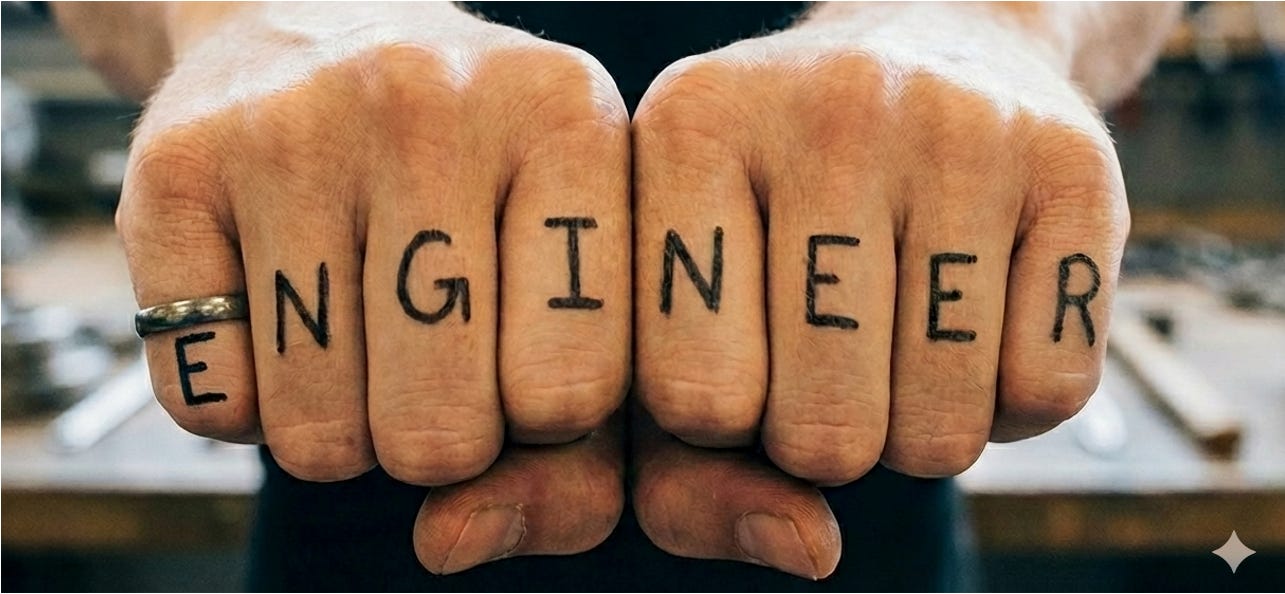
In medicine, students put on the white coat and recite the Hippocratic Oath, pledging to do no harm and to put patients first. The Iron Ring ceremony plays a similar role for Canadian engineers: a moment of collective conscience‑forming, where you are reminded that your calculations touch the lives of many. The ring on your smallest finger is deliberately inconvenient. It scrapes on the drafting board, catches on the keyboard, clinks against the instrument panel, as if to whisper: remember your lifelong commitment to ethical conduct as an engineer.
If trust is the primary product of 21st‑century engineering, education and ethics are the two main levers. The science can be dazzling, the talent world‑class, the capital abundant—and yet, if people do not trust the systems we build, they will not use them, or worse, they will use them and feel betrayed. Modern engineering rests on a new trinity: excellence, talent, and trust. The bottleneck is no longer just what we can build, but what society is willing to let into its bloodstream.
2. Tech adoption moves at the speed of trust
“Tech adoption moves at the speed of trust,” said Mary Wells, Dean of Engineering at the University of Waterloo, as she echoed Canada’s federal AI Minister Evan Solomon. The minister’s original line was, “Tech moves at the speed of innovation, adoption moves at the speed of trust.”
As a member of Canada’s federal AI Strategy Task Force, Dean Wells has been helping design how the country will build “safe AI systems and public trust in AI”—from research funding and infrastructure to education and sector‑specific deployment. Technical breakthroughs and regulatory frameworks are necessary but not sufficient. Without trust—grounded in transparency, accountability, and genuine public engagement—AI will stall at the pilot stage or trigger backlash that sets everyone back [4]3.
Waterloo is building trust into its research DNA. The TRuST (Trust in Research Undertaken in Science and Technology) network brings together scholars across engineering, sciences, health, and social sciences to ask a deceptively simple question: when people say they trust or distrust technologies like AI, what are they actually reacting to? Is it the accuracy of models, the integrity of institutions, the history of harms, or the opacity of decision‑making? Their events, such as “Conversations on Artificial Intelligence: Should It Be Trusted?”, are deliberately uncomfortable: pairing AI scientists with ethicists, lawyers, and even NASA and Google representatives to probe where trust is deserved and where it is not [5, 6]45.
Dean Well’s phrase lands with me because I have lived the flip side of it. During COVID period in Hong Kong, I led a company that built the venue‑based contact tracing app LeaveHomeSafe (安心出行). Citizens scanned a QR code at every restaurant, office building, and public facility for a privacy‑preserved record used in contact tracing and co‑location exposure alerts. When the Government made the use of LeaveHomeSafe app mandatory in November 2020, the system undoubtedly helped health authorities cut chains of transmission. For more than 2 years, the city managed to avoid the worst waves that later hammered other regions [7, 8]67.
But inside the team, the engineering satisfaction of seeing the system scale sat alongside a knot in the stomach. Some in the population saw the app not as a public‑health shield but as a surveillance symbol. Even when you know how carefully you have architected privacy safeguards, you cannot demand trust—you can only invite it.
The same observations applied to vaccines. Whether people trusted mRNA, protein‑based, or inactivated vaccines—and whether they trusted brands from “East” or “West”—often mattered more than the underlying science.
The lesson, in hindsight, is simple: no technical or scientific merit can outrun a deficit of trust. In the Age of AI, when systems will see, infer, and influence more of our lives than any contact tracing app ever did, the speed of adoption will track the speed of trust. And the speed of trust depends on more than compliance or efficiency; it depends on whether people believe that the systems—and the institutions behind them—are ultimately on their side.
3. Re‑wiring engineering education for excellence and trust
If trust is the primary product, education is where we build the factory. The Iron Ring ceremony is a powerful moment, but it is still a capstone ritual. The harder question is: what happens in the preceding four years? What curriculum, culture, and institutional choices wire engineers to earn trust?
At the University of Toronto, Dean Christopher Yip is stretching the definition of what an engineering education should contain. Under his leadership, U of T Engineering has launched new certificates in Public Policy and in Justice, Equity, Diversity & Inclusion (JEDI), as well as a tri‑campus minor in Global Leadership. The stated goal is to prepare engineers who can “tackle society’s biggest challenges” by integrating technical excellence with policy literacy and a deep understanding of equity and inclusion [9, 10]89.
At Queen’s University, Dean Kevin Deluzio has been spearheading a transformation of Smith Engineering into “a ground‑breaking new model for engineering education.” Queen’s is restructuring around common first‑year experiences, multidisciplinary projects, and real‑world challenges where social context and stakeholder trust are central. In his public statements, Deluzio emphasizes that engineers must be prepared for “complex, interconnected problems” and that the new model is meant to produce graduates who are “adaptable, collaborative, and responsive to society’s needs[11, 12]1011.”
Back at Waterloo, Dean Mary Wells sits on top of a unique trust engine: a massive co‑op program that pushes engineering students into industry, startups, and research labs multiple times before graduation. Waterloo’s model is not just about employability; it is about closing the loop between lab, market, and public. When students ship real products and services—whether fintech apps, medical devices, or infrastructure planning tools—they experience first‑hand that a brilliant design is the one users trust.
Layered on top of this educational fabric are explicit trust projects. TRuST’s work on AI‑disclosure standards for research articles is quietly rewriting what “honest engineering” looks like in an AI‑mediated world: if you use AI in your analysis or writing, you say so, in a standardized way that peers and the public can audit. That is Iron‑Ring thinking applied to the invisible layer of code and data.
Iron‑Ring values—humility before complexity, accountability for failure, and duty to the public—inspire a new kind of engineering education, one where excellence is measured not only in throughput and accuracy, but in how well we prepare both humans and machines to behave responsibly.
4. Trustworthy by design and trust in practice
How do we design for trust, rather than treat it as an afterthought? One way is to start from the human emotion that underlies it: empathy. That is precisely what De Kai is trying to harness with the Empathic AI Institute, a U.S. non‑profit he founded to “guide AI’s evolution with compassion, awareness, and ethics.” As an AI pioneer whose work on machine translation has underpinned some of the world’s most widely used translation systems, he has seen how tools meant to connect people can deepen divisions when trained on our worst behaviour [13]12.
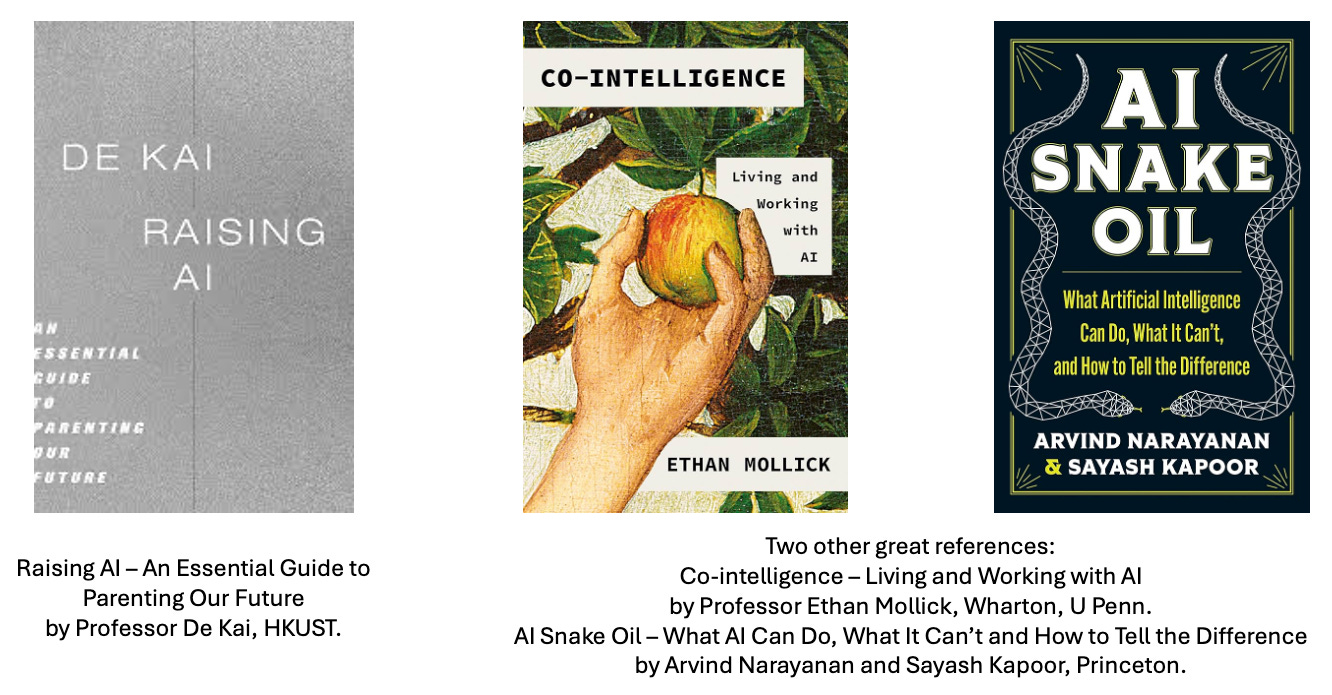
De Kai’s Raising AI suggests that we think of ourselves as “parents of AI,” responsible not only for what systems do but for what they learn from us. These “artificial children” grow up in the climate of our online and institutional behaviour; “we are the training data.” Every design decision, every API, every product spec becomes part of an invisible curriculum that AIs absorb. If we cut corners on safety, reward engagement over truth, or encode a trinity of bias—technological, institutional, and cultural—into reward functions, we are teaching entire generations of models that this is how the world works. This is trust by design: tending the climate in which AI grows as carefully as we design its architecture [14]13.
Trust in practice is also about the everyday governance of platforms and resources. Consider Wattpad, the storytelling platform that Allen Lau co‑founded and led for over a decade. Wattpad now has tens of millions of users and has turned amateur stories into major film and publishing deals. Lau describes Wattpad as “a community where everyone has a story to tell” and emphasizes that the company’s mission is to “entertain and connect the world through stories.” Underneath the hood, Wattpad is driven by recommendation algorithms, moderation policies, and community norms. When a story goes viral, it is both a creative success and a test of the platform’s integrity [15, 16]1415.
Similar dynamics appear across more traditional domains of engineering where our nine deans operate:
Water and environment – Dean Viviane Yargeau (McGill University): Her work on endocrine‑disrupting chemicals and wastewater treatment is about protecting the trust we place in something as basic and invisible as tap water [17]16.
Biomedical design and self‑assessment – Dean Heather Sheardown (McMaster University): Beyond leading biomedical and chemical engineering, she has co‑authored work on developing students’ self‑assessment skills, training them to evaluate their own performance honestly—a core ingredient of professional integrity [18]17.
Multidisciplinary systems – Dean James Olson (University of British Columbia): Olson champions initiatives that bring engineers together with planners, architects, and policymakers, arguing that challenges like climate change and inequity require technical and social trust to be designed in tandem [19]18.
Human factors and cyber‑human systems – Dean Caroline Cao (University of Ottawa): Her background in surgical navigation, human factors, and Industry 4.0/5.0 pushes design toward resilience and safety in complex socio‑technical environments, from operating rooms to XR‑enabled training [20]19.
Sustainable materials – Dean Phillip Choi (University of Regina): Choi’s decades in polymer science and sustainable materials remind us that trust in supply chains, packaging, and infrastructure starts with molecular‑scale choices [21]20.
Inclusive engineering for communities – Dean Michael Bradley (University of Saskatchewan): Bradley speaks about creating “the engineers the world needs,” with an emphasis on diversity and Indigenous inclusion—another axis of trust, especially in rural and resource‑dependent communities [22]21.
Each of these leaders works on a different layer of the same question: how to ensure that the systems we build—algorithms, platforms, water systems, hospitals, grids—are not just functional but deserving of trust.
5. The next trust statement on Jan 24, 2026
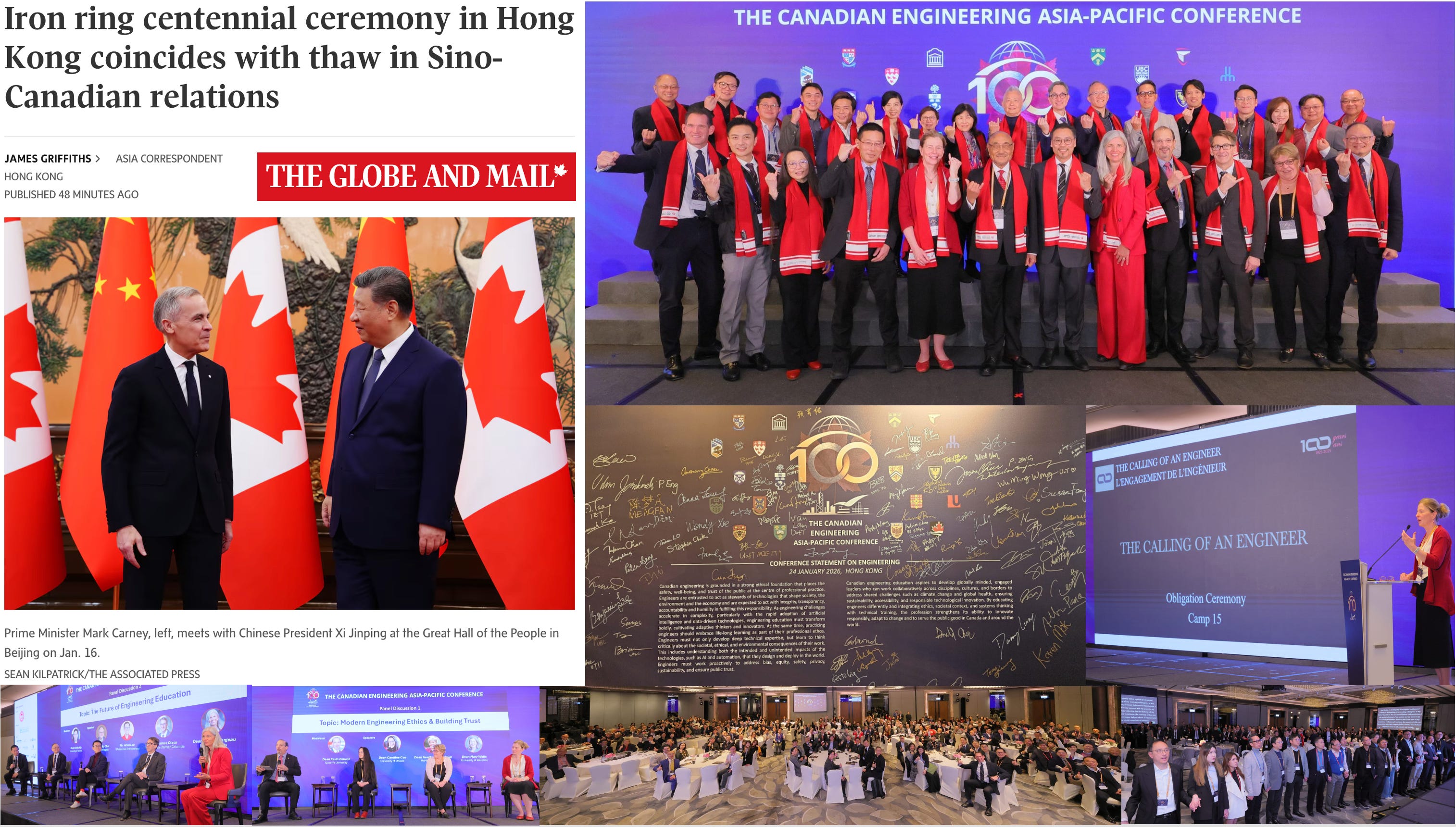
On January 24, 2026, eight Canadian engineering deans (aforementioned in the article) gathered in Hong Kong alongside other Asia‑Pacific leaders for The Canadian Engineering Asia‑Pacific Conference – A Centennial Celebration of Engineering Excellence and Ethics, symbolized by the Iron Ring. It is quite literally, the cast of this entire essay stepping off the page into the same room. The conference culminated in the issuance of The Canadian Engineering Asia‑Pacific Conference Statement on Engineering. Think of it as the next iteration of the trust contract that the Iron Ring ceremony embodies.
The 20th century asked engineers not to let bridges fall; the 21st asks us not to let trust collapse.
If you care about where this goes next—about how we raise both engineers and AIs, about how we protect human dignity while embracing technological possibility—then this is the event for you.
More information on this unprecedented historical assembly of academic leaders in Canadian engineering.
External media coverage for the event below:
The Globe and Mail (Jan 25, 2026): Iron ring centennial ceremony in Hong Kong coincides with thaw in Sino-Canadian relations
South China Morning Post (Jan 24, 2026): Hong Kong ‘pivotal’ to rebuilding Canada-China academic links, experts say
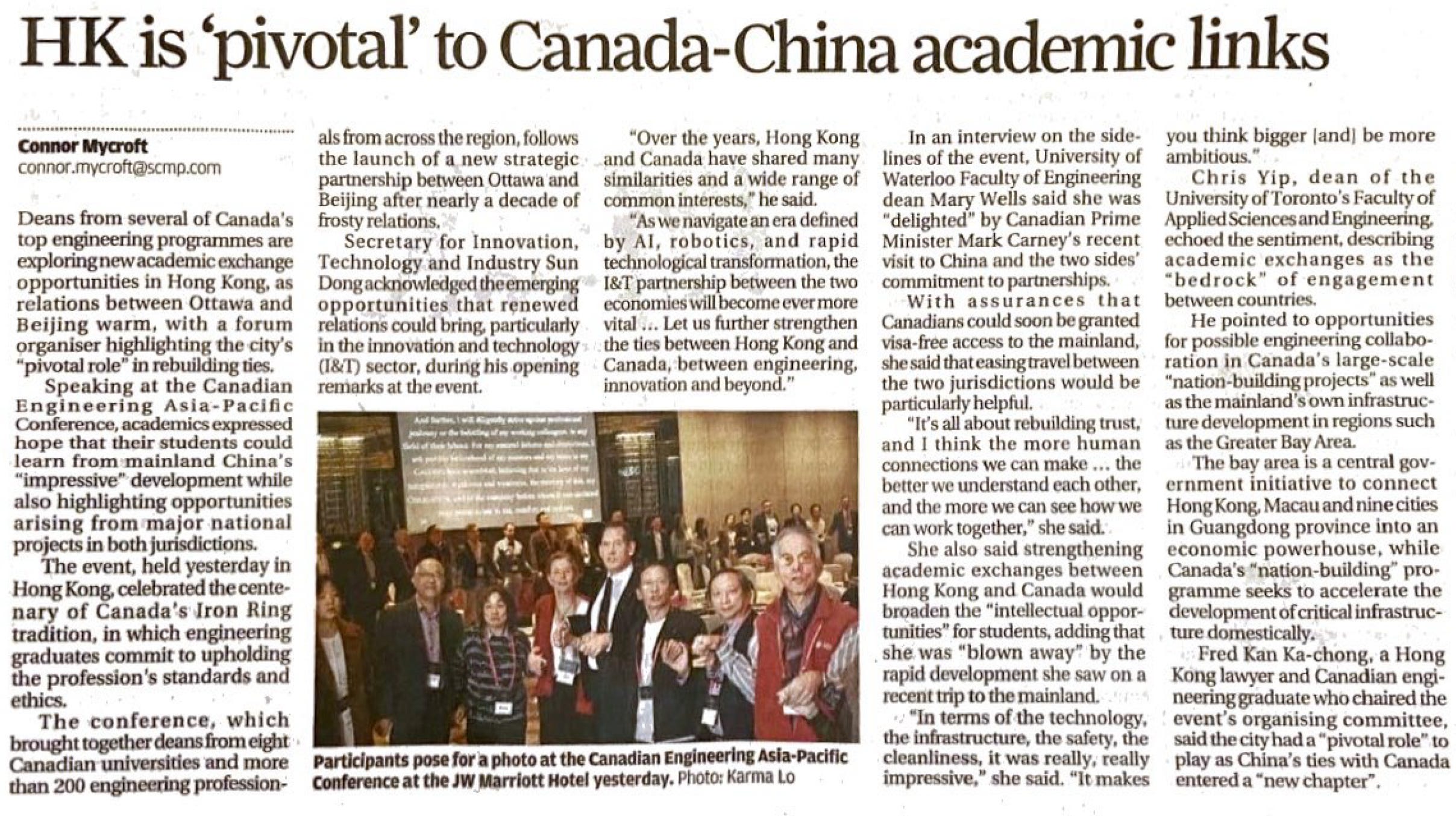
South China Morning Post (Jan 25, 2026 Print): HK is ‘pivotal’ to Canada-China academic links
The Iron Ring is no longer just a ring of steel on a single finger. It is becoming a network of commitments circling the globe.
The Canadian Engineering Asia‑Pacific Conference – A Centennial Celebration of Engineering Excellence and Ethics:


Notes: I have used Perplexity to perform final edits and Gemini 3/Nano Bananas for the first two illustrations.
Footnote references:
Corporation of the Seven Wardens Inc., “A brief history of the Calling of an Engineer,” ironring.ca. Accessed: Jan. 11, 2026. [Online]. Available: https://ironring.ca/background-en/
McMaster University, “Ethical engineering – The symbolism behind the Iron Ring.” Accessed: Jan. 11, 2026. [Online]. Available: https://www.eng.mcmaster.ca/civil/news/ethical-engineering-the-symbolism-behind-the-iron-ring/
Government of Canada, “AI Strategy Taskforce – Advisory Council on Artificial Intelligence,” Innovation, Science and Economic Development Canada. Accessed: Jan. 11, 2026. [Online]. Available: https://ised-isde.canada.ca/site/advisory-council-artificial-intelligence/en/ai-strategy-taskforce
University of Waterloo, “Trust in Research Undertaken in Science and Technology (TRuST) Scholarly Network.” Accessed: Jan. 11, 2026. [Online]. Available: https://uwaterloo.ca/trust-research-undertaken-science-technology-scholarly-network/
Perimeter Institute, “TRuST Scholarly Network’s Conversations on Artificial Intelligence: Should It Be Trusted?” Event description. Accessed: Jan. 11, 2026. [Online]. Available: https://perimeterinstitute.ca/events/trust-scholarly-networks-conversations-artificial-intelligence-should-it-be-trusted
Food and Environmental Hygiene Department, Government of the Hong Kong Special Administrative Region, “Launch of ‘LeaveHomeSafe’ COVID‑19 exposure notification mobile app,” circular to operators/licensees of places of public entertainment, Nov. 17, 2020. Accessed: Jan. 11, 2026. [Online]. Available: https://www.fehd.gov.hk/english/licensing/guide_general_reference/COVID19_LeaveHomeSafe.html
Office of the Government Chief Information Officer, Government of the Hong Kong Special Administrative Region, “‘LeaveHomeSafe’ system ceased operation,” press release, Jan. 8, 2023. Accessed: Jan. 11, 2026. [Online]. Available: https://www.info.gov.hk/gia/general/202301/08/P2023010800303.html
University of Toronto, “Christopher Yip – Dean, Faculty of Applied Science & Engineering.” Accessed: Jan. 11, 2026. [Online]. Available: https://www.engineering.utoronto.ca/about/office-of-the-dean/christopher-yip-dean/
University of Toronto Engineering, “Dean Christopher Yip on the future of engineering education,” YouTube, video. Accessed: Jan. 11, 2026. [Online]. Available:
The Queen’s Journal, “Smith Engineering is transforming engineering education at Queen’s.” Accessed: Jan. 11, 2026. [Online]. Available: https://www.queensjournal.ca/smith-engineering-is-transforming-engineering-education-at-queens/
Queen’s University, “Dean Kevin Deluzio talks about Smith Engineering at Queen’s University journey to transformation,” Facebook, video. Accessed: Jan. 11, 2026. [Online]. Available: https://www.facebook.com/queensuniversity/videos/dean-kevin-deluzio-talks-about-smith-engineering-at-queens-university-journey-to/1017408869471758/
Empathic AI Institute, “Guiding AI’s evolution with compassion, awareness, and ethics.” Accessed: Jan. 11, 2026. [Online]. Available: https://empathetic.ai
De Kai, Raising AI. Cambridge, MA, USA: MIT Press, 2025. Accessed: Jan. 11, 2026. [Online]. Available: https://dek.ai/raising-ai/
Wattpad, “Allen Lau – Co-founder and Board Director.” Accessed: Jan. 11, 2026. [Online]. Available: https://company.wattpad.com/allen-lau
CanadianSME, “Allen Lau: A visionary serial entrepreneur to watch out for.” Accessed: Jan. 11, 2026. [Online]. Available: https://canadiansme.ca/allen-lau-a-visionary-serial-entrepreneur-to-watch-out-for/
McGill University, Department of Chemical Engineering, “Viviane Yargeau – Professor.” Accessed: Jan. 11, 2026. [Online]. Available: https://www.mcgill.ca/chemeng/viviane-yargeau
McMaster University Faculty of Engineering, “Strategic plan.” Accessed: Jan. 11, 2026. [Online]. Available: https://www.eng.mcmaster.ca/about-us/strategic-plan/
University of British Columbia, Department of Mechanical Engineering, “James Olson – Dean and Professor.” Accessed: Jan. 11, 2026. [Online]. Available: https://mech.ubc.ca/james-olson/
Kenniff Leadership, “Dean of Engineering, University of Ottawa – profile.” Accessed: Jan. 11, 2026. [Online]. Available: https://kenniffleadership.com/en/engineering-dean-uottawa/
University of Regina, Faculty of Engineering and Applied Science, “Phillip Choi – Faculty directory.” Accessed: Jan. 11, 2026. [Online]. Available: https://www.uregina.ca/engineering/directory/phillip-choi.html
University of Saskatchewan College of Engineering, “Dean’s message.” Accessed: Jan. 11, 2026. [Online]. Available: https://engineering.usask.ca/about/deans-message.php